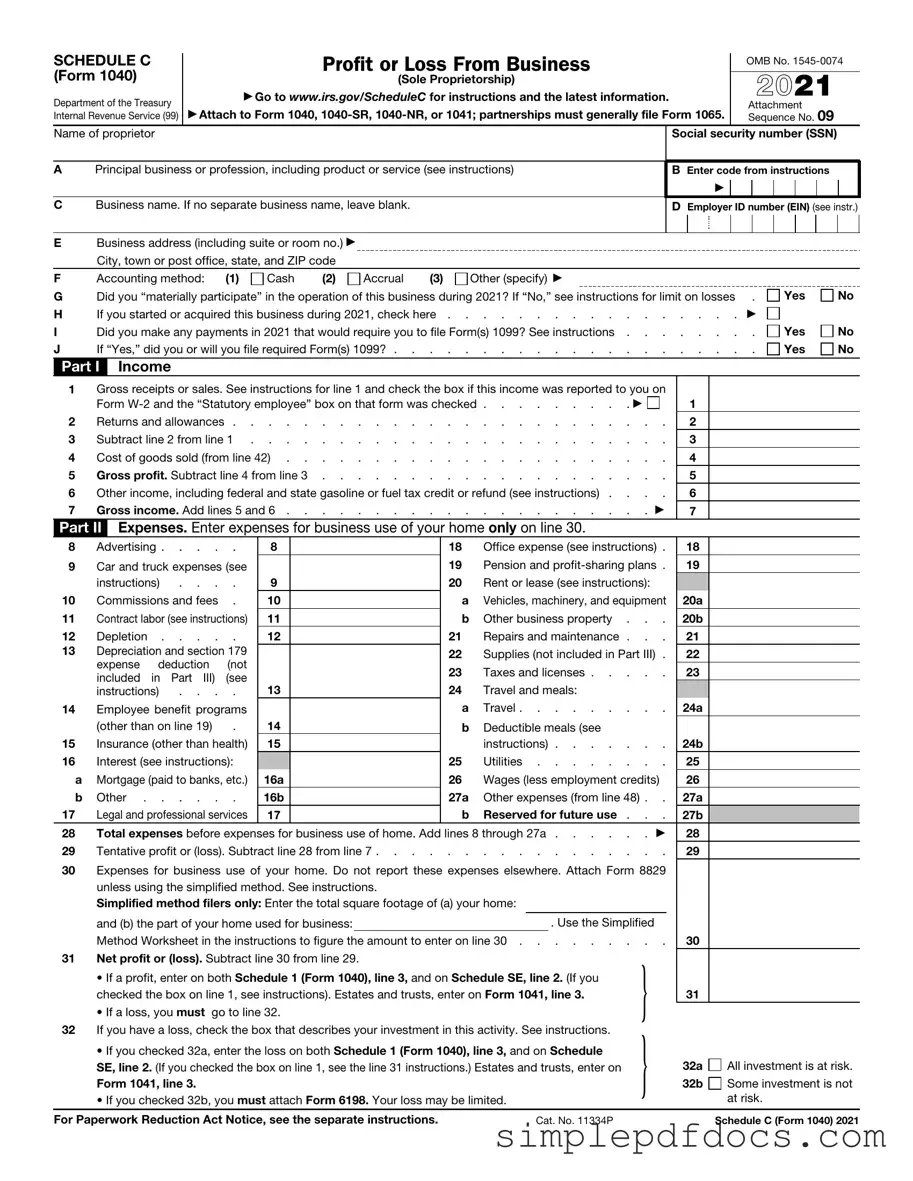
Fill Your IRS Schedule C 1040 Form
The IRS Schedule C 1040 form is a crucial document for self-employed individuals and sole proprietors, serving as a detailed report of income and expenses from their business activities. This form allows taxpayers to report their earnings, ensuring that they pay the appropriate taxes on their net profit. It requires a breakdown of various expenses, including costs for supplies, utilities, and other operational expenses that directly impact the bottom line. Additionally, the Schedule C form provides space to report the cost of goods sold, which is essential for businesses that maintain inventory. Taxpayers must also consider deductions available to them, such as home office deductions, which can significantly reduce taxable income. Accurate completion of Schedule C not only helps in complying with tax obligations but also provides insights into the financial health of the business. Understanding this form is essential for anyone engaged in self-employment, as it plays a vital role in the overall tax filing process.
More PDF Templates
Apartment Owners Association Forms - Providing complete information ensures smoother processing of the application.
When engaging in the sale of a trailer, it's important to utilize the proper documentation to ensure a seamless process. The California Trailer Bill of Sale form serves as a crucial legal instrument that guarantees the buyer and seller are protected while confirming the sale details. To create your own document, you can visit California Templates for a complete fillable version.
Dl 44 Form Pdf Dmv - The form includes places for contact information to facilitate communication with the DMV.
How to Write a Contract for Rental Property - The Landlord's right to approve guests protects property interests.
Document Specifics
| Fact Name | Description |
|---|---|
| Purpose | The IRS Schedule C (Form 1040) is used by sole proprietors to report income or loss from a business they operated or a profession they practiced. |
| Filing Requirement | If you earn $400 or more in net earnings from self-employment, you must file Schedule C along with your Form 1040. |
| Deductible Expenses | Expenses such as supplies, utilities, and business travel can be deducted, reducing your taxable income. |
| Net Profit Calculation | Net profit or loss is calculated by subtracting total expenses from total income, and it directly affects your overall tax liability. |
| State-Specific Forms | Some states require additional forms for self-employment income. Check your state's regulations for specific requirements. |
How to Write IRS Schedule C 1040
Completing the IRS Schedule C (Form 1040) is an essential step for self-employed individuals and sole proprietors. This form allows you to report income and expenses related to your business. Following the steps below will help ensure that you fill out the form accurately and efficiently.
- Gather necessary documentation. Collect all relevant financial records, including income statements, receipts for expenses, and any other supporting documents.
- Obtain the Schedule C form. You can download it from the IRS website or request a paper copy.
- Fill in your basic information. At the top of the form, enter your name, Social Security number, and the name of your business.
- Choose your accounting method. Indicate whether you use cash or accrual accounting for your business.
- Report your income. In Part I, list all gross receipts or sales from your business. Include any returns or allowances if applicable.
- Detail your expenses. Move to Part II and categorize your business expenses. Common categories include advertising, car and truck expenses, and utilities.
- Calculate your net profit or loss. Subtract total expenses from your gross income. This figure will be reported on your Form 1040.
- Complete the rest of the form. Ensure all sections are filled out completely, including any applicable deductions or credits.
- Review your entries. Double-check all calculations and ensure that the information is accurate and complete.
- Sign and date the form. Your signature certifies that the information provided is true and correct to the best of your knowledge.
- Submit the form. File Schedule C along with your Form 1040 by the tax deadline, either electronically or via mail.
Dos and Don'ts
When filling out the IRS Schedule C (Form 1040), it's essential to follow specific guidelines to ensure accuracy and compliance. Here are seven things to consider doing and avoiding:
- Do keep detailed records of all income and expenses related to your business.
- Don't mix personal and business expenses; maintain separate accounts.
- Do report all sources of income, including cash transactions.
- Don't underestimate your expenses; be thorough in documenting all costs.
- Do use the correct accounting method, either cash or accrual, and be consistent.
- Don't forget to sign and date the form before submission.
- Do consult the IRS guidelines or a tax professional if you have questions.
Documents used along the form
When filing taxes as a sole proprietor or self-employed individual, the IRS Schedule C (Form 1040) serves as a vital document. However, it is often accompanied by several other forms and documents that help provide a complete picture of your financial situation. Understanding these additional documents can facilitate a smoother tax filing process and ensure compliance with tax regulations.
- Form 1040: This is the standard individual income tax return form used by U.S. taxpayers. Schedule C is attached to Form 1040 to report income or loss from a business operated as a sole proprietorship.
- Schedule SE: This form is used to calculate self-employment tax, which is a combination of Social Security and Medicare taxes. If you earn more than a certain amount from self-employment, you must file this form in conjunction with Schedule C.
- Form 4562: This document is used to claim depreciation and amortization on business assets. If you have significant investments in equipment or property for your business, this form will help you account for their decreasing value over time.
- Form 8829: This form is for claiming expenses for business use of your home. If you operate your business from your home, this document allows you to deduct certain expenses related to that space.
- Form 1099-MISC: If you receive payments from clients or customers that exceed a certain threshold, they may issue you a Form 1099-MISC. This form reports income that is not considered wages and must be included in your Schedule C income.
- Florida Motor Vehicle Power of Attorney: This form allows an individual to designate another person to manage vehicle-related tasks on their behalf, including registration and selling. For more information, visit floridaforms.net/blank-motor-vehicle-power-of-attorney-form/.
- Receipts and Documentation: While not a formal tax form, keeping receipts and other documentation is essential. These records support your income and expense claims on Schedule C and help substantiate your deductions in case of an audit.
By understanding and utilizing these additional forms and documents alongside the IRS Schedule C, individuals can more accurately report their business income and expenses. This comprehensive approach not only aids in compliance but also maximizes potential deductions, ultimately leading to a more favorable tax outcome.